Behringer B-1 Reviews: See Why 0 Shoppers Rated It 0 Stars!
Some say the Behringer B-1 rocks, others think it needs more tuning. See what 0 artists think about these Behringer microphones — before you hit checkout.
 Supermod
  Moderator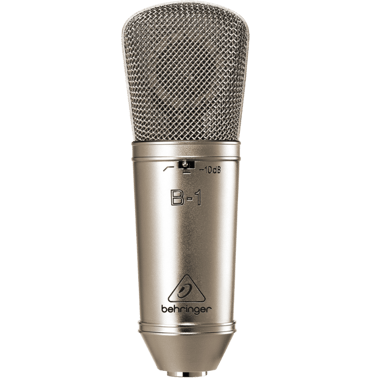
 Recaptor
 Behringer B-1 Review: A Studio Condenser with Classic Character
The Behringer B-1 has long been known as an accessible yet surprisingly capable large-diaphragm condenser microphone. Designed for both aspiring creators and seasoned professionals, it aims to deliver studio-grade clarity at a fraction of the cost of high-end competitors. Whether you’re recording vocals, instruments, or hosting a podcast, the B-1 is the kind of mic that makes you pause and think, “Can something this affordable really sound this good?” Spoiler alert: on paper, it just might.
Released back in 2001, this mic has earned its spot in home and project studios worldwide. With a simple cardioid polar pattern, solid metal build, and excellent technical credentials, it offers a strong argument for being one of the best entry-level condensers still available today.
Detailed Specs & Features
At its heart, the Behringer B-1 is a condenser microphone featuring a large diaphragm capsule. This configuration is well-loved for its warmth and sensitivity, capturing every nuance of a vocal or instrument performance. The B-1’s 20 Hz to 20 kHz frequency response provides a full-bodied tonal range, suitable for both high-pitched instruments and deep vocal timbres.
It features a respectable 138 dB max SPL, meaning it can handle loud sources like drum kits and brass instruments without unwanted distortion. That’s a big plus for musicians who don’t want to swap mics for different sessions. Its -34 dBV/Pa sensitivity ensures even softer sources—like spoken vocals or acoustic guitar—come through with excellent detail.
For those concerned about noise, the 13 dB self-noise is impressively low for this price category. That translates into a cleaner, quieter signal, especially noticeable during delicate vocal takes. Add to that a 75 Hz low-cut filter and a -10 dB pad, and you’ve got a mic that can adapt to both whisper-quiet and high-volume recording environments.
Connectivity & Compatibility
Being an XLR-based microphone, the B-1 connects easily to mixers, interfaces, and professional recorders. It supports 48V phantom power and offers a balanced output that helps reduce hum and interference. There’s no USB connectivity here, so it’s not a plug-and-play device—more of a studio workhorse meant to sit proudly on a stand in front of a pop filter. Compatibility is broad, spanning PCs, Macs, mixers, and even cameras (with the right interface setup).
Design & Build
Physically, the Behringer B-1 feels like a tank. Its metal body and matte finish lend it a professional and understated look that fits any studio setup. Measuring about 6.9 inches tall and weighing around one pound, it’s substantial but not cumbersome. The inclusion of a shock mount and windscreen in the box adds real value—no need to hunt for accessories separately.
Durability-wise, the mic doesn’t offer any water resistance or dust protection, so it’s best suited for indoor use. But its included carrying case makes it travel-friendly for musicians who hop between studios or live venues.
Performance & Audio Quality
On paper, the B-1’s pressure gradient acoustic principle and transformerless circuitry suggest a crisp, transparent sound with minimal coloration. It’s engineered to capture detail faithfully, which can be a blessing for vocalists who want to preserve their natural tone—or a curse for those who rely on gear to mask imperfections. The fast transient response makes it suitable for detailed sources like acoustic instruments, while the low noise floor ensures clarity even in quiet recording setups.
Another notable strength is its 50-ohm output impedance, which allows for efficient signal transfer with minimal loss over XLR cables. The result is a consistent signal even when recording through long cable runs.
Pros & Cons
Pros
- Excellent sensitivity and low self-noise for its price range.
- Solid metal construction and included shock mount make it studio-ready out of the box.
- Handles high SPL sources easily with a -10 dB pad and 138 dB max SPL rating.
Cons
- Lacks USB connectivity or onboard controls, limiting plug-and-play convenience.
- Single polar pattern means no flexibility for figure-8 or omnidirectional recording setups.
Price & Value for Money
At around $109 at Sweetwater, the Behringer B-1 delivers remarkable bang for your buck. Considering it ships with a shock mount, windscreen, and carrying case, it’s practically a ready-to-record package. Many microphones at this price point compromise on build or noise performance, but the B-1 holds its ground against models twice its cost.
For beginners stepping into studio recording, it’s an affordable entry point without cutting too many corners. Intermediate users will appreciate its reliable sound reproduction, and even professionals may find it useful as a secondary mic for instruments or backup sessions.
Quick Take
The Behringer B-1 is a classic example of “simple done right.” It’s not flashy, doesn’t pretend to be more than it is, yet consistently delivers studio-worthy clarity. From its rugged design to its clean sound, it’s a microphone that continues to impress two decades after its debut.
Closing Recommendation
If you’re building a home studio or upgrading from a USB mic, the Behringer B-1 is a worthy contender. It’s not about bells and whistles—it’s about solid performance. Its cardioid pickup pattern makes it ideal for focused vocal or instrument capture, and its overall sound profile leans toward natural and detailed rather than overly bright or colored.
Those seeking multi-pattern flexibility or onboard digital features might need to look higher up the price ladder, but for under $120, this microphone punches well above its weight.
Verdict
Rating: Based on the specifications and overall feature set, we believe Behringer B-1 deserves 4.4 out of 5.
- Winner Feature → Exceptional sensitivity and low noise performance for studio clarity.
- Needs Improvement → Limited versatility due to single cardioid pattern and lack of onboard controls.
Reviews 0
The good, the bad, and the brutally honest.Average Rating


More Microphones 1229
Unlock more awesome finds.